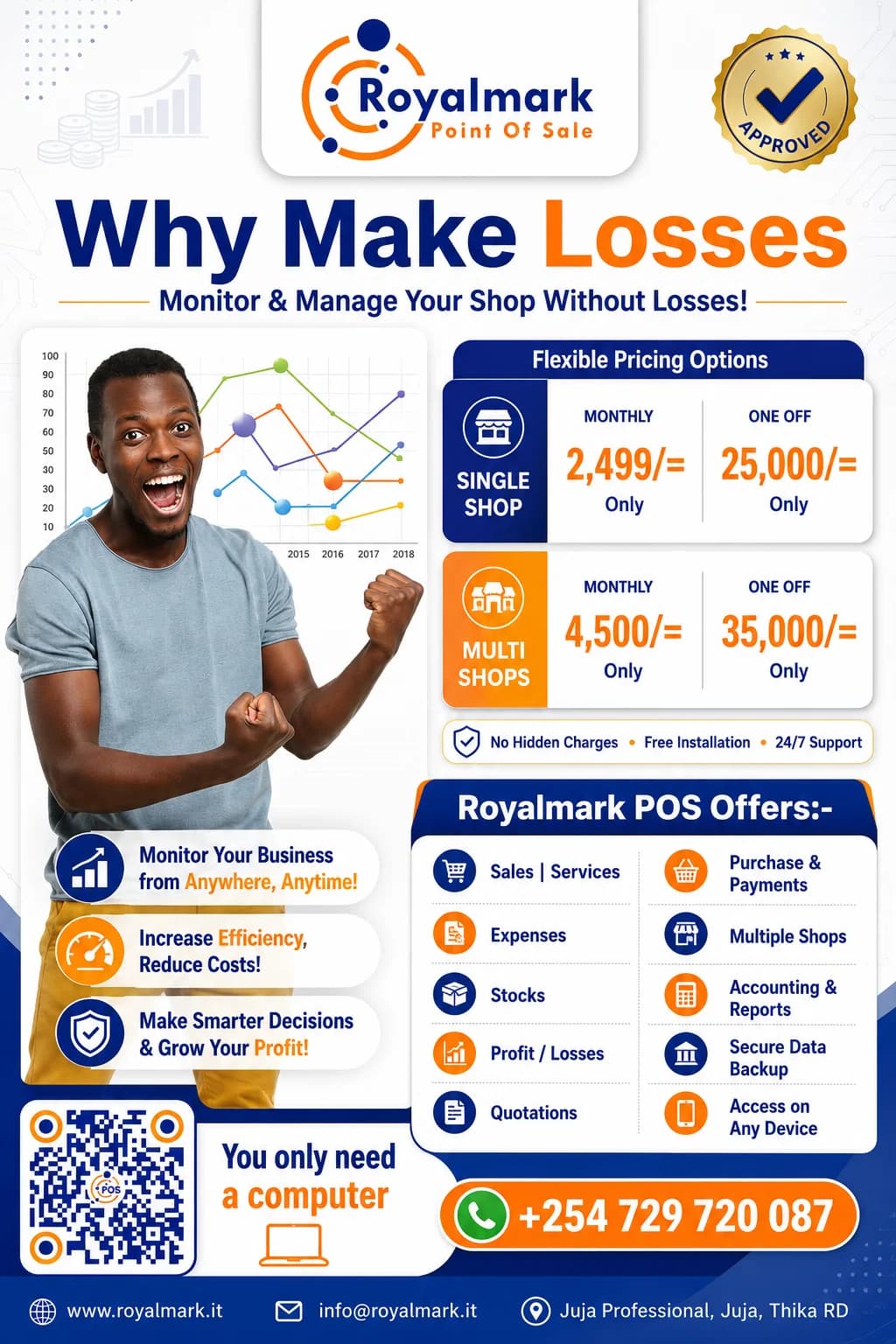
Choosing a point of sale system begins with the work your business needs to do every day. Before comparing packages, write down how you sell, receive stock, record expenses and check performance. Use that list to guide the demonstration.
Start with sales and stock
Bring examples of your products, services, purchasing records and returns. Ask the provider to demonstrate a normal sale, a correction and an inventory update. Check how selling units, product references and stock adjustments fit your workflow.
Think beyond a single counter
If you operate more than one shop, ask how branch records and reports are organized. Confirm the number of shops included in the proposed package and how the system supports the people responsible for each location.
See the reports you will actually use
A dashboard should help you answer specific questions: what sold, what is left, what was spent and which transactions need checking. Ask to see sales, expenses, purchases and profit / loss reports, and make sure you understand the data behind each figure.
Check devices, connectivity and support
Discuss your computers, printers and any scanners before installation. Royalmark advertises online and offline options, so confirm which setup is being quoted, which tasks work offline and what happens when connectivity returns. Ask how staff will be trained and how you can get support.
Compare the full cost
Royalmark single-shop monthly pricing starts at KES 2,499, with multi-shop monthly pricing from KES 4,500. One-off packages are also available. Compare the initial amount alongside hardware, annual support, backups, updates and any applicable service charges. Ask for a written quotation for your requirements.
Explore Royalmark POS features and pricing or book a free demonstration.